


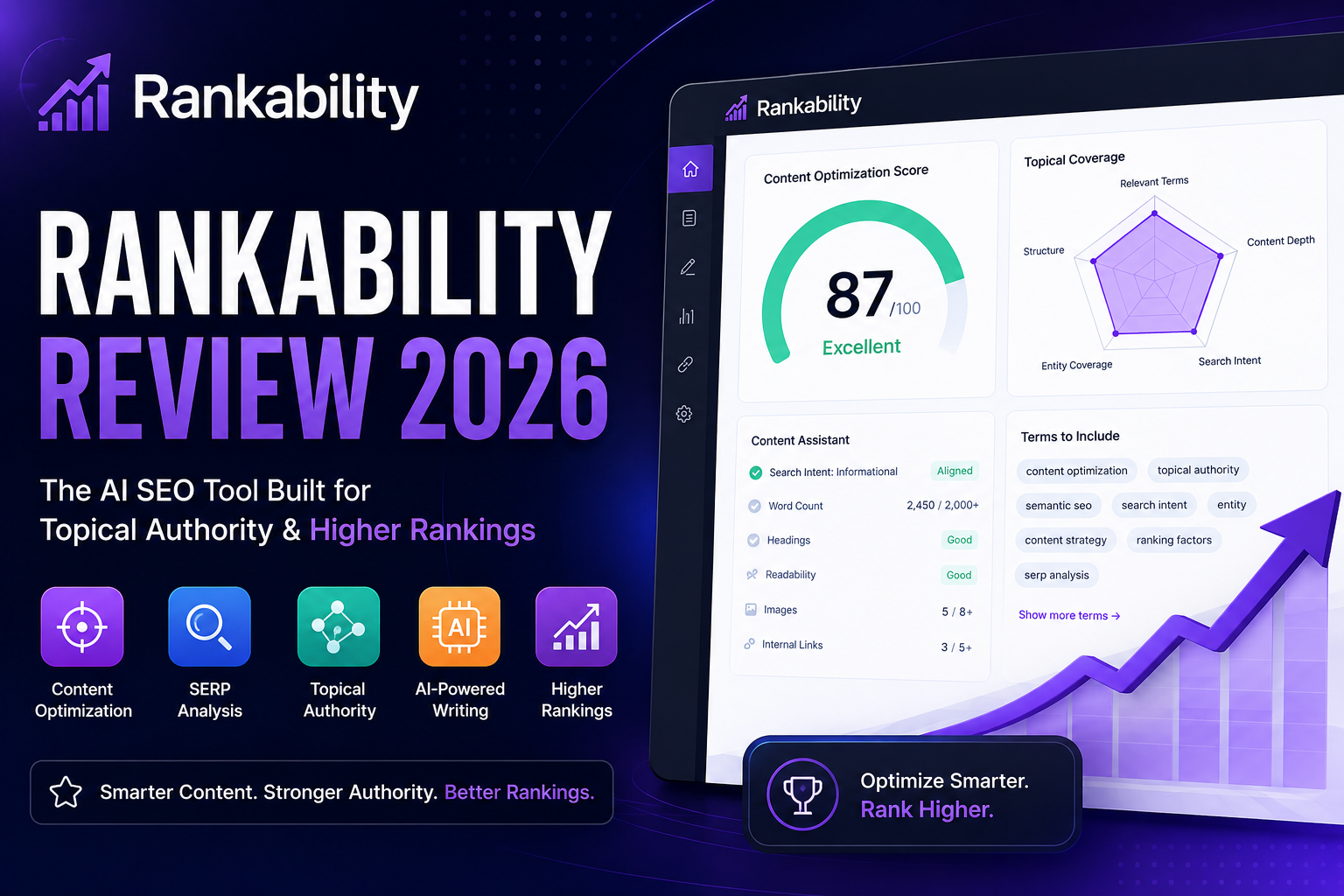
SEO content optimization has changed over the last few years. Ranking a page is no longer about repeating the same keyword multiple times or stuffing articles with exact-match phrases. Google’s search systems now prioritize relevance, search intent, topical authority, content depth, and overall usefulness.
At the same time, AI-generated content has become mainstream. Bloggers, affiliate marketers, agencies, and SaaS companies are producing content faster than ever using tools like ChatGPT and Claude. The problem is that most AI-generated content still lacks strategic optimization.
That’s where Rankability enters the conversation.
Rankability is an AI-powered SEO optimization platform built for modern search engines. Instead of focusing only on keyword density, it aims to help creators build semantically relevant, intent-focused content that aligns with current Google ranking systems.
Over the past few weeks, I explored Rankability’s workflow, optimization system, SERP analysis features, and AI-assisted tools to see whether it actually provides value for content creators in 2026.
In this review, I’ll cover:
- What Rankability is
- Its best features
- Pros and cons
- How it compares to competitors
- Whether it’s useful for AI Overviews and semantic SEO
- Who should use it
What Is Rankability?
Rankability is an SEO content optimization tool designed to help websites create content that performs better in search results.
The platform combines:
- AI-assisted optimization
- Search intent analysis
- SERP competitor analysis
- Semantic SEO recommendations
- Topical authority workflows
- Content grading systems
Unlike many older SEO tools, Rankability focuses heavily on contextual relevance rather than outdated keyword-stuffing tactics.
That makes it particularly useful for:
- Bloggers
- Affiliate marketers
- Content agencies
- SaaS brands
- Niche website owners
- SEO-focused publishers
The platform’s overall goal is simple: help users create content that is more aligned with how Google evaluates modern search quality.
My First Impression of Rankability
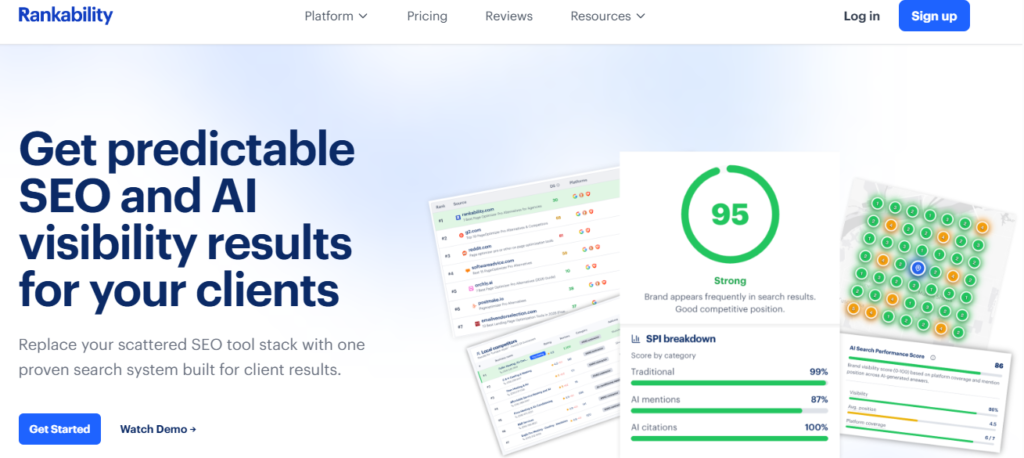
The first thing I noticed after using Rankability was how focused the platform feels.
A lot of SEO tools try to become “all-in-one” solutions, which often leads to cluttered dashboards and confusing workflows. Rankability feels more streamlined and centered around content optimization itself.
The interface is relatively clean, and most of the value comes from the optimization editor.
Once you enter a target keyword, Rankability analyzes competing pages and starts generating recommendations related to:
- Content depth
- Semantic relevance
- Missing topics
- Search intent
- Structure
- Related entities
What I liked most is that the recommendations generally feel natural. Some optimization tools encourage excessive keyword repetition, but Rankability appears more focused on overall topical completeness.
That approach makes more sense for modern SEO.
How Rankability Works
At its core, Rankability works by comparing your content against top-ranking pages in Google’s search results.
The platform evaluates:
- Relevant terms
- Topic relationships
- SERP patterns
- Search intent signals
- Semantic coverage
It then generates optimization suggestions to help improve your content’s competitiveness.
The workflow is straightforward:
- Enter your target keyword
- Analyze ranking competitors
- Create or paste content
- Optimize using recommendations
- Improve topical coverage and readability
This process is especially useful for long-form SEO articles where missing contextual information can impact rankings.
Rankability Features
Content Optimization Editor
The optimization editor is the core feature of the platform and easily its strongest component.
Instead of only highlighting keyword frequency, the editor focuses more on:
- Contextual relevance
- Semantic relationships
- Missing topical coverage
- Competitive content gaps
This creates a more balanced optimization experience.
For example, when optimizing an article, Rankability doesn’t simply tell you to repeat your keyword more often. Instead, it identifies related concepts and supporting information that top-ranking pages commonly include.
That feels much more aligned with how Google understands content today.
Topical Authority Support
One area where Rankability stands out is topical authority optimization.
Google increasingly rewards websites that demonstrate expertise across an entire topic rather than isolated keywords. Rankability helps users identify supporting subtopics and related entities that strengthen content depth.
This becomes especially valuable for:
- Affiliate sites
- Niche blogs
- SaaS content marketing
- Topic cluster strategies
If your goal is building authority around a subject instead of ranking a single article, Rankability’s semantic suggestions can be very useful.
AI-Assisted Workflow
Rankability also includes AI-assisted writing support.
The AI features can help generate:
- Outlines
- Topic suggestions
- Content expansions
- Optimization improvements
For content teams producing multiple articles weekly, this can save a significant amount of time.
However, I still believe human editing remains essential.
AI-generated content often lacks:
- Personality
- Original insights
- Experience-driven context
- Strong storytelling
The best results usually come from combining AI assistance with manual editing and SEO strategy.
SERP Competitor Analysis
One feature I found genuinely helpful was the competitor analysis system.
Rankability breaks down ranking pages and highlights:
- Missing sections
- Relevant contextual terms
- Optimization weaknesses
- Intent mismatches
This helps remove much of the guesswork from SEO writing.
Instead of manually studying multiple competing articles, you can quickly understand what Google appears to reward for a particular query.
That can make content planning much faster.
Search Intent Optimization
Search intent has become one of the most important ranking factors in modern SEO.
You can have a technically optimized article, but if it doesn’t satisfy the user’s intent, rankings often struggle.
Rankability appears heavily focused on this concept.
The platform analyzes whether your content aligns with:
- Informational intent
- Commercial intent
- Transactional intent
- Navigational intent
This is particularly important for affiliate and SaaS content where intent mismatches commonly hurt rankings.
What I Liked About Rankability
After spending time with the platform, several strengths became clear.
First, the optimization system feels more modern than many older SEO tools. Instead of encouraging robotic keyword placement, Rankability emphasizes contextual depth and semantic relevance.
Second, the workflow is relatively beginner-friendly once you understand basic SEO concepts.
Other strengths include:
- Clean interface
- Strong semantic optimization
- Helpful competitor analysis
- AI-assisted content workflow
- Good support for long-form SEO content
The platform also feels well-suited for current AI search trends, especially with Google moving further toward contextual understanding and AI-generated summaries.
Where Rankability Could Improve
No SEO tool is perfect, and Rankability also has limitations.
The biggest issue for some users may be pricing. Smaller bloggers or beginners with limited budgets may find advanced optimization tools difficult to justify initially.
Another limitation is that Rankability is not a complete SEO suite.
It focuses mainly on content optimization rather than:
- Backlink analysis
- Technical SEO audits
- Rank tracking
- Site-wide SEO monitoring
That means many users will still need additional SEO tools alongside it.
I also noticed that while the AI assistance is useful, the generated suggestions sometimes still require refinement to sound fully natural.
That’s not unique to Rankability, though. Nearly every AI-assisted SEO tool faces the same challenge.
Rankability vs Surfer SEO
Many people compare Rankability with Surfer SEO because both tools focus heavily on content optimization.
Surfer SEO remains one of the most established names in this category, but Rankability feels more focused on:
- Semantic depth
- Topical authority
- Intent alignment
- Contextual optimization
Surfer sometimes encourages aggressive optimization if users follow recommendations too strictly.
Rankability appears slightly more balanced in that area.
For users focused heavily on topical authority and AI-era SEO, Rankability may feel more modern in its optimization philosophy.
Is Rankability Good for AI Overviews?
Potentially yes.
Google’s AI Overviews prioritize content that is:
- Clear
- Helpful
- Contextually complete
- Well structured
- Semantically rich
Rankability’s optimization approach aligns closely with these goals.
The platform encourages comprehensive topic coverage and natural content structure rather than shallow keyword optimization.
That becomes increasingly important as AI-powered search evolves.
Websites targeting AI Overview visibility need:
- Strong semantic relevance
- Entity optimization
- Clear headings
- Helpful answers
- Contextual completeness
Rankability can support many of those areas effectively.
Who Should Use Rankability?
Rankability works best for users who take SEO content seriously.
It is particularly useful for:
- SEO agencies
- Affiliate marketers
- Content publishers
- SaaS companies
- Niche website owners
- Bloggers targeting competitive keywords
If your growth strategy depends heavily on organic traffic, the platform can provide valuable optimization insights.
However, casual bloggers publishing occasional content may not fully utilize its advanced features.
Final Verdict: Is Rankability Worth It?
After testing Rankability, I think it’s one of the more forward-thinking SEO optimization platforms available right now.
Its biggest advantage is that it feels aligned with where search engines are heading rather than where SEO used to be.
Instead of focusing mainly on keyword repetition, the platform emphasizes:
- Semantic relevance
- Topical authority
- Intent optimization
- Contextual completeness
- AI-assisted workflows
That approach fits modern Google search systems much better.
While it may not completely replace a full SEO toolkit, it can become a powerful part of a modern content optimization strategy.
For bloggers, agencies, and affiliate marketers trying to compete in increasingly difficult SERPs, Rankability is definitely worth considering in 2026.
Rankability FAQs
Rankability is an AI-powered SEO content optimization platform focused on semantic SEO, topical authority, and search intent optimization.
Both tools are strong, but Rankability appears more focused on contextual optimization and topical authority strategies.
Yes, it can help improve the structure, relevance, and optimization of AI-assisted content.
Its semantic optimization system aligns well with many factors associated with AI-friendly search content.
SEO agencies, bloggers, affiliate marketers, SaaS brands, and content publishers can benefit most from Rankability.
The interface is relatively clean, though beginners may need time to understand advanced SEO optimization concepts.
