


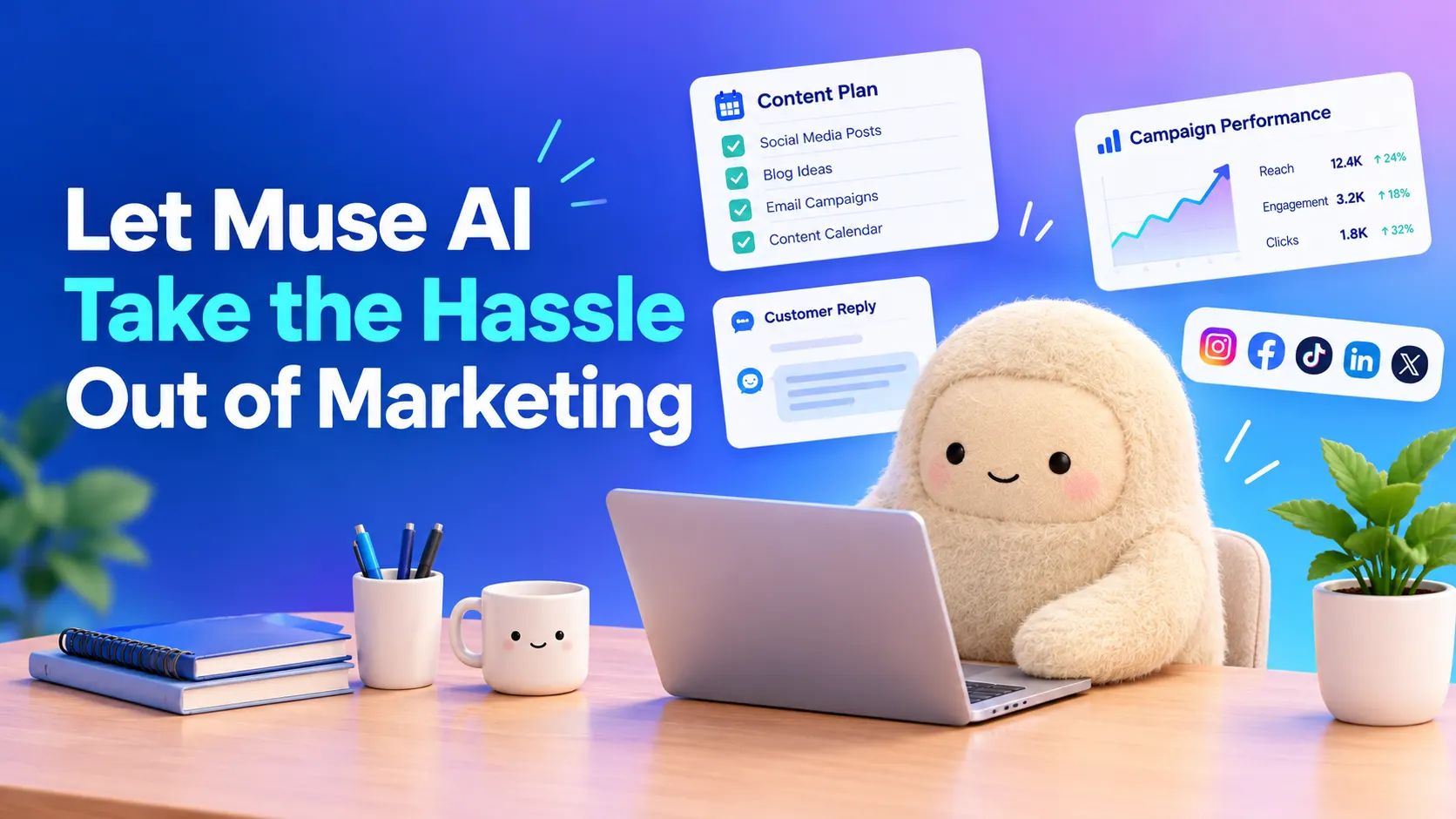
Marketing a business takes more time than most people realize. You need to plan content, respond to customers, manage social media, review campaigns, analyze performance, and keep looking for ways to attract new customers. When you are running a small business, handling all these tasks alongside daily operations can quickly become overwhelming.
This is where Muse AI comes in.
Muse is Meta’s personal AI agent designed to help people and small businesses get work done, not just answer questions. It can work across connected apps, help organize business tasks, develop marketing plans, draft customer replies, and assist with improving advertising and content. Instead of managing every task manually, you can give Muse a goal and let it help move the work forward.
In this guide, we will explore how Muse AI can simplify marketing, which tasks it can help with, and how small businesses can use it to make their workflows more efficient.
What Is Muse AI?
Muse AI is a personal AI agent developed by Meta. Unlike a traditional chatbot that mainly generates responses to prompts, Muse is designed to work through tasks, interact with connected applications, and help users achieve specific goals.
For small businesses, Muse can serve as an AI-powered assistant for everyday operations and marketing activities. Depending on the connected apps and available capabilities, it can help plan content, draft customer responses, review business information, suggest campaign improvements, and organize work around business goals.
The main idea is simple: tell Muse what you want to accomplish, provide the necessary context, and let it help with the steps required to get there.
For example, instead of spending hours organizing your next marketing campaign, you could ask Muse to review your previous campaigns, identify potential improvements, and prepare a plan for the coming week.
Muse can then help organize the work and prepare drafts for your review. You remain in control of important decisions and actions.

How Can Muse AI Make Marketing Easier?
Marketing involves many small tasks that consume time without always requiring your direct attention. Muse can help reduce some of this workload by working across supported apps and assisting with repetitive business activities.
Here are some practical ways businesses can use it.
1. Plan Your Marketing Campaigns
A successful marketing campaign requires planning, research, consistent messaging, and regular performance reviews. For a small business owner, bringing all these activities together can be challenging.
Muse can help you organize your marketing goals and turn them into actionable plans. You can explain your business objectives, describe your target audience, and provide relevant information about your products or services.
Based on the available context, Muse can help you develop campaign ideas, organize tasks, and prepare a schedule for upcoming marketing activities.
For example, you could ask it to create a marketing plan for launching a new product, including content ideas, customer outreach, and promotional activities.
Rather than starting from scratch every time, you get a structured plan that you can review and refine before implementation.
2. Create and Improve Marketing Content
Consistent content helps businesses communicate with customers, explain their products, and build brand awareness. However, producing fresh ideas and maintaining a regular publishing schedule can be difficult.
Muse can help with content planning and drafting by using information from the business tools you connect to it.
You could ask Muse to:
- Develop social media content ideas for an upcoming campaign.
- Draft promotional messages for a new product.
- Suggest improvements to existing marketing content.
- Organize content ideas into a weekly publishing plan.
- Help maintain consistent messaging across marketing activities.
For example, an online store preparing for a seasonal sale could ask Muse to organize promotional ideas, draft social media posts, and prepare campaign materials for review.
The benefit is not that every piece of content becomes perfect automatically. You still need to check the accuracy, tone, and relevance of the material. Muse can simply make the initial planning and drafting process easier.
3. Respond to Customers More Efficiently
Customer communication is another area where small businesses spend considerable time. Questions about products, orders, services, and availability can fill an inbox quickly.
Muse can help draft customer replies and organize information from connected business applications. This can make it easier to respond consistently without writing every message from the beginning.
For example, you could ask Muse to review relevant customer inquiries and prepare draft responses based on your existing business information.
Before using any response, make sure the information is correct and appropriate for the customer. Sensitive issues, complaints, refunds, and unusual requests may still require your personal attention.
The goal is to reduce repetitive writing while maintaining a helpful and professional customer experience.
4. Improve Your Advertising Strategy
Running advertisements without understanding their performance can waste both time and money. Businesses need to review campaign results, understand which messages resonate with customers, and identify opportunities for improvement.
Muse for Small Business is designed to help business owners work with connected business tools, including Facebook and Instagram business accounts, and assist with understanding what is working across ads and content.
You can use it to help organize campaign information, explore potential improvements, and draft ideas for future promotions.
For instance, you might ask Muse to review the available campaign information, identify patterns worth investigating, and suggest new ad concepts to test.
However, AI recommendations should not replace proper performance analysis. Before changing your advertising budget or launching a new campaign, verify the available data and evaluate whether the proposed changes support your business goals.
5. Connect Your Marketing Tools in One Workflow
Many businesses use separate tools for social media, email, project management, customer communication, and sales. Switching between these platforms makes it harder to maintain a clear picture of ongoing work.
Muse for Small Business supports connections with various third-party services. Depending on availability and your account setup, these can include tools such as Canva, Shopify, Klaviyo, QuickBooks, Asana, Notion, Slack, and Facebook and Instagram business accounts.
These connections can help Muse work with relevant business context instead of relying entirely on information you manually provide in every conversation.
For example, a business owner could connect relevant sales and marketing tools, ask Muse to help prepare a promotional campaign, and use the resulting plan to organize the next steps.
Available integrations and permissions can vary, so check the current connector list in your Muse account before planning a workflow around a particular application.
6. Save Time on Repetitive Marketing Tasks
Some marketing activities are important but repetitive. Organizing campaign ideas, preparing content drafts, collecting information, and keeping track of upcoming tasks can take attention away from higher-value work.
Muse can help break larger goals into smaller tasks and assist with moving them forward across supported applications.
You might ask it to prepare next week’s marketing plan, organize campaign tasks, draft promotional messages, or summarize information relevant to an upcoming launch.
This approach allows you to spend less time coordinating every detail and more time reviewing strategy, understanding customers, and improving your products or services.
Keep in mind that automation does not mean every task should run without supervision. Review the permissions available to Muse and approve important actions before they happen.
How to Use Muse AI for Your Marketing Workflow
Getting useful results from an AI agent starts with giving it a clear goal and enough context to understand your business.
Here is a practical way to get started.
Step 1: Define your marketing goal.
Decide what you want to achieve. Your goal might be attracting more potential customers, improving social media engagement, launching a product, or organizing your marketing activities.
Step 2: Connect the relevant business apps.
Connect the supported applications you need for the task. Only grant the permissions necessary for your intended workflow, and review the available integrations in your account.
Step 3: Give Muse clear instructions.
Explain your business, target audience, offer, marketing objective, and expected outcome. Specific instructions generally produce more useful results than vague requests.
For example, you could use this prompt:
“Help me prepare a seven-day marketing plan for my online store. Review the relevant information available in my connected business tools, suggest content ideas for Facebook and Instagram, draft promotional messages, and organize the work into clear daily tasks. Show me the proposed actions before anything is published or sent.”
Step 4: Review the proposed plan.
Check whether the recommendations match your audience, brand voice, budget, and business goals. Correct inaccurate assumptions and adjust the plan where necessary.
Step 5: Approve and monitor important actions.
Review drafts and proposed changes before they are published, sent, or used to spend money. Track the results and use what you learn to improve future campaigns.
This process gives you a practical way to use Muse as a marketing assistant without handing over complete control of your business.
Is Muse AI Enough to Manage Your Entire Marketing Strategy?
Muse AI can help with several marketing activities, but it should not be treated as a complete replacement for a marketing team or specialist tools.
Marketing involves more than producing content and organizing tasks. Businesses also need customer research, competitive analysis, brand positioning, search engine optimization, conversion tracking, and a clear understanding of their market.
Muse can assist with planning and execution across supported workflows, but the quality of its recommendations depends on the information available, the instructions you provide, and the capabilities of the connected applications.
For example, an SEO campaign still requires keyword research, search intent analysis, technical website checks, and performance monitoring. A paid advertising campaign still needs accurate tracking, budget control, and ongoing evaluation.
The most effective approach is to use Muse to reduce administrative work and support decision-making while keeping human judgment at the center of your marketing strategy.
Is Muse AI Worth Trying for Small Businesses?
Muse AI is worth exploring if you regularly spend time coordinating marketing tasks, drafting content, responding to customers, and switching between business applications.
Its main appeal is the ability to work toward a goal across connected tools rather than simply generating a response to each individual prompt.
Small business owners, online store operators, and marketing professionals may find this approach useful for organizing their workflows and reducing repetitive work.
However, the value you get will depend on your specific needs, available integrations, usage limits, and how well Muse fits into your existing processes. Start with a small, clearly defined task before using it for more complex business activities.
You should also review the current pricing, supported features, and permissions before relying on Muse for essential marketing operations.
Final Thoughts
Marketing does not have to mean spending every day switching between applications, drafting messages, organizing campaigns, and trying to keep up with an endless list of tasks.
Muse AI offers a different way to approach this workload. By giving it clear goals and connecting the relevant business tools, you can use it to help plan content, prepare customer communications, explore campaign improvements, and organize marketing activities.
It will not eliminate the need for strategy, creativity, or human oversight. However, it can help reduce the time spent on repetitive work and make it easier to move from an idea to an actionable plan.
If marketing tasks are taking too much time away from growing your business, exploring Muse AI could be a practical step toward a more organized workflow.
Frequently Asked Questions About Muse AI
Muse AI can help small businesses plan marketing activities, draft content, prepare customer replies, organize campaigns, and work with information from supported connected applications. Its usefulness depends on the task, integrations, and permissions available.
Muse can assist with multi-step tasks across supported applications and help move business goals forward. However, some actions require user approval, and its capabilities depend on the connected tools and configured permissions.
Muse can help plan social media content, draft promotional messages, and suggest improvements to marketing materials. You should review the content for accuracy, brand consistency, and suitability before publishing it.
Muse for Small Business is designed to help business owners work with connected Facebook and Instagram business accounts and improve their ads and content. Actual results depend on campaign data, implementation, and audience response.
Muse offers free access for many common tasks, with usage limits and paid subscription options for additional usage. Check the official Muse website for the current terms and pricing available to your account.
Muse’s business workflows are designed to keep users in control. Meta states that nothing publishes, sends, or spends without approval in its small-business offering. Review the permissions and approval requirements in your account before using any workflow.
No. Muse can help with planning, drafting, coordination, and other repetitive tasks, but businesses still need human judgment for strategy, creative direction, customer relationships, and evaluating campaign performance.
