


Key Takeaways
- A citation is a supporting link to a page Google retrieved and used to build the answer. The page must be indexed and snippet-eligible — no other technical requirements.
- Google builds AI answers with retrieval-augmented generation: its ranking systems retrieve pages from the Search index, and the model writes the answer from them.
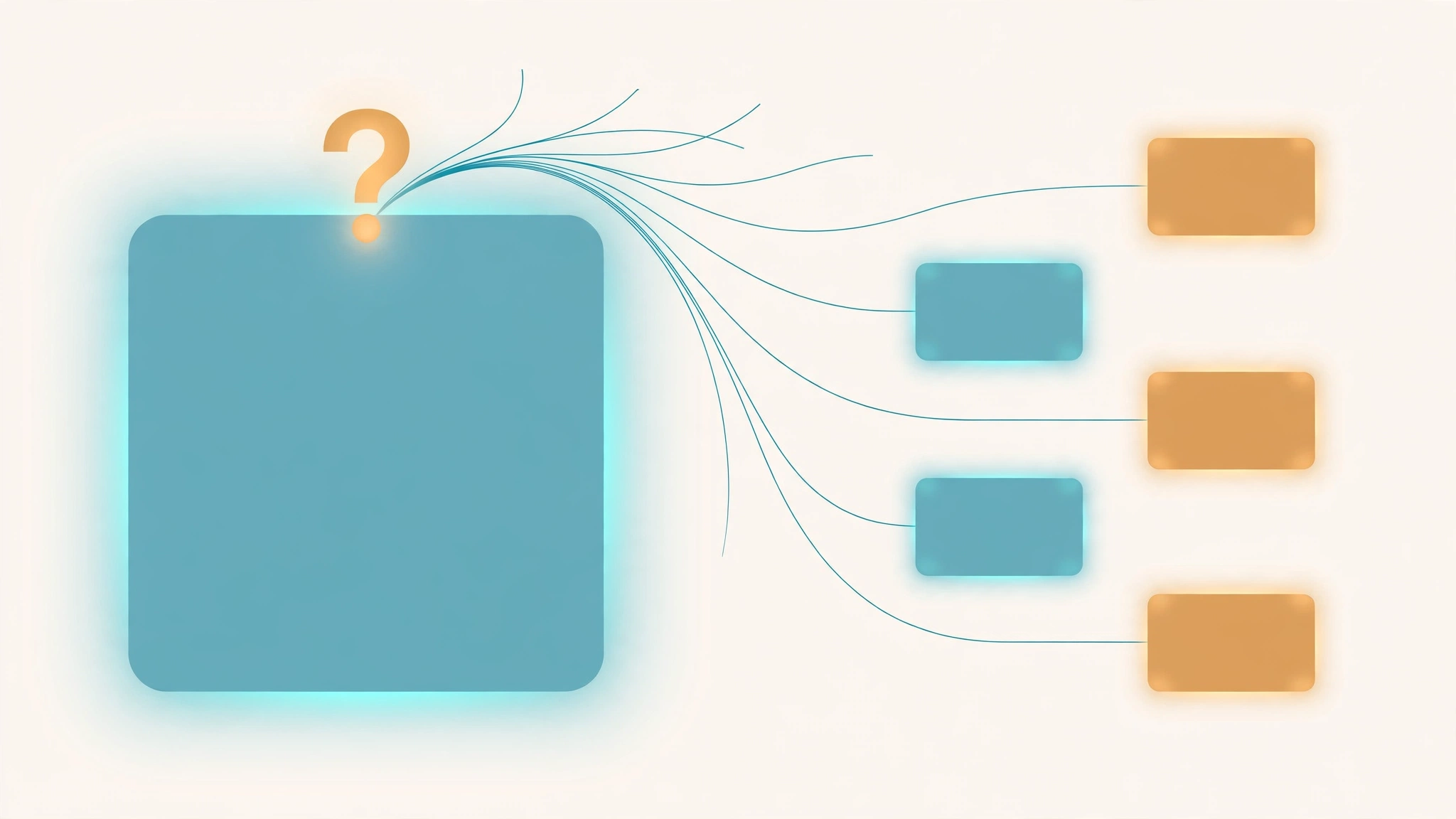
- Query fan-out splits one question into many related searches run at once, so pages win citations by answering sub-questions, not just the headline query.
- A citable page is an extractable page: direct answers under question headings, clear definitions, tables, named facts, visible freshness.
- Google says you can ignore llms.txt, content “chunking”, rewriting for AI systems, and inauthentic mentions.
- A citation is visibility, not traffic: measure it as share of voice, not as a click channel.
What Is a Citation in Google AI Mode?
A citation in Google AI Mode is a clickable link to a web page Google’s systems retrieved from its Search index and used as supporting evidence for part of the answer. The model reviews specific information from the retrieved pages, writes the response from what they say, and links the pages that support it.
You cannot apply to be cited — there is no submission form. Google’s Search Central documentation is explicit: a page must be indexed and eligible to be shown in Google Search with a snippet, and there are no additional technical requirements. The citation is a by-product of retrieval: first your page has to be findable by Google’s ordinary ranking systems, then it has to contain the passage the answer needs. AI Mode and AI Overviews are also not the same surface — Google says they may use different models and techniques, so the responses and links they show will vary. Treat them as two chances, not one system.
How Does Google Build an AI Mode Answer?
Google builds an AI Mode answer in three stages — retrieve, fan out, and write — with the citation decided in the first two. First, retrieval: retrieval-augmented generation, or grounding, in which its ranking systems retrieve up-to-date pages for the model to review. If your page cannot rank in Google Search, it cannot be retrieved for an AI answer either.
Second, fan-out: the model breaks the question into subtopics and issues related searches for each one at the same time. Google’s March 2025 launch post describes “query fan-out” as multiple related searches run concurrently across subtopics and data sources — including the Knowledge Graph and shopping data — then brought together. Third, writing: the model combines what the retrieved pages say into one response, with links supporting each part. There is a fallback: when Google lacks high confidence in a response’s helpfulness and quality, it becomes a set of ordinary web search results instead.
What Makes a Page Eligible to Be Cited?
A page is eligible to be cited in AI Mode when it meets the same bar as classic search: indexed and eligible to be shown in Google Search with a snippet. That is the whole technical requirement — no additional requirements, and no special schema or markup to add.
One condition sits on top of that bar: a site must be included in Search generative AI features in Search Console. If you opted your site out there, your pages will not be cited, and no content work overrides that — check it first. The page must also be crawlable and findable: crawling allowed in robots.txt, content findable through internal links, important content in textual form, structured data matching the visible text. The controls work the other way too — nosnippet, data-nosnippet, max-snippet, or noindex limit what Search shows from your pages — but opting out is a trade, not a refund: the AI answer still appears, built from whoever remains, so you lose the citation without recovering the click.
How Does Query Fan-Out Change Which Pages Get Cited?
Query fan-out changes which pages get cited because it changes the questions being asked. A traditional search runs one query and ranks the results; AI Mode runs many. Google’s optimisation guide defines fan-out as a set of concurrent, related queries the model generates to request more information and fetch additional results for the user’s query.
Google’s own example makes it concrete. For “how to fix a lawn that’s full of weeds”, fan-out queries might include “best herbicides for lawns”, “remove weeds without chemicals”, and “how to prevent weeds in lawn”. Each is a separate retrieval with its own candidate pages — and a separate chance to be cited. The winner is the best answer to the sub-question, often not the page that ranks first. A page outside the top ten can still win one fan-out query.
At Google I/O in May 2025, Google said AI Mode breaks a question into subtopics and issues “a multitude of queries simultaneously”, and its Deep Search mode takes the same technique further — it can issue hundreds of searches and produce a fully-cited report. Google also says AI Mode queries are, on average, three times longer than traditional searches — more parts, more sub-questions, each a slot for a different page. One warning: creating a separate page for every query variation to manipulate rankings violates Google’s scaled content abuse spam policy — one strong page answering the main question and its follow-ups beats a dozen thin ones.
What Does a Citable Page Actually Look Like?
A citable page is a page whose passages can be lifted. The model does not cite a page in general — it cites a specific passage supporting a specific sentence. So the question to ask about any page is not “is this good content?” but “does it contain a self-contained passage an answer could quote?”
Google’s optimisation guide points at the qualities such passages share: a unique point of view — a first-hand review stands out where a summary simply restates what is already available; non-commodity content that is helpful, reliable, and people-first; and organisation — content written for a human audience, easy to follow, with clear headings.
Translated into page habits, that means four things: definitions in plain words up front, because so many questions are definitional; direct answers under question-form headings; tables for comparisons and lists for steps; and specific, verifiable facts — numbers with dates, named sources, tested results — because grounding triggers citation. Freshness and attribution belong in the same list: a visible author, visible dates, and named sources make a page easier to trust. Our guide to writing introductions AI can quote walks through the same discipline at sentence level.
How Should You Structure a Page for AI Mode?
Structure a page for AI Mode the way you would for a reader who only reads one section: each part must stand on its own. Google’s guide says its systems understand the nuance of multiple topics on a page and show the relevant piece — so one well-organised page can serve several fan-out queries at once.
The structure has four layers: one H1 stating the topic plainly; H2s phrased as the questions your buyers actually ask, in logical order — pre-written answer components mapping onto the sub-questions fan-out generates; a direct 40–60 word answer opening each major section; and real lists and tables for anything enumerable. Our guide to structuring content for AI crawlers covers this in depth. Two honest notes: structured data is not required for AI search, though it remains a good idea overall; and images and video are part of the answer too.
What Should You Stop Doing?
Google’s optimisation guide has a section titled “Mythbusting generative AI search” — a list of things to stop spending money on.
You do not need llms.txt or any other AI-specific file: Google says you do not need new machine-readable files or markup, because Google Search does not use them. You do not need to “chunk” your content into tiny pieces, and there is no ideal page length. You do not need to rewrite content just for AI systems: they understand synonyms and general meanings. You do not need inauthentic mentions: Google says seeking them is not as helpful as it might seem, since its ranking systems focus on high-quality content while other systems block spam. The same warning applies on the ChatGPT side, which our ChatGPT citation playbook covers. And you do not need to optimise for AI Mode as if it were a separate search engine: from Google’s perspective, it is still SEO.
How Do You Measure Whether AI Mode Cites You?
Google will not hand you a clean number. Traffic from AI features is counted in Search Console’s Performance report under the “Web” search type, blended into organic data. Google points to one view — the Generative AI performance report — for how your content performs in generative AI features. Read it as a trend — impressions, not a citation rate.
The method that does tell you is a prompt portfolio, as our guide to tracking AI Overview citations sets out. Pick twenty to fifty questions your buyers actually ask — the long, multi-part kind that trigger AI Mode — and check them weekly in a clean browser session, logged out, with a consistent location. For each, log whether an AI Mode answer appeared, whether your brand was cited, and which competitors appeared instead. The metric that matters is your share of voice: the percentage of AI answers for your questions that cite you. Track it over quarters, not as a snapshot.
Set expectations with the click data. In a randomised field experiment by Agarwal and Sen, reported in our piece on AI Overviews cutting clicks, an AI Overview’s appearance cut outbound organic clicks by 39.8% where it appeared, while citations inside it generated only about 8% of all clicks, per the authors’ own summary. That is a preliminary working paper on US desktop users, not a universal rate. Judge a citation as visibility, not as a replacement for the visit it replaced.
What Does the Hydrogen Upgrade Change?
On November 12, 2026, Google announced Gemini 4 Hydrogen is available globally in Google Search, calling it “the biggest model upgrade to Search yet”. The part that matters for citations is improved query fan-out and linking: Google says Hydrogen’s reasoning “supercharges” fan-out, “connecting you to a broader range of helpful links than before”.
Read that carefully: it is a claim about distribution, not volume. The fan-out now reaches further — more subtopics, more diverse sources — so the set of pages that can be cited has widened. It does not say there are more citations per answer, or that any particular site will gain, and it does not change the eligibility bar. Two cautions: do not claim every AI Mode answer uses Hydrogen — Google says the two surfaces may use different models and techniques. And model changes can shift which sources get chosen without any change on your site, so if your citation share moves after November 12, check the announcement date against your trend line before rewriting pages.
The Checklist: Getting Cited in Google AI Mode
Work through this list page by page, starting with the pages that already earn traffic.
- Confirm eligibility. The page is indexed and snippet-eligible; the site is included in Search generative AI features in Search Console. No
nosnippetornoindexblocking it. - List the sub-questions. Write down the five to ten smaller questions inside the main question.
- Answer each one directly. Give every sub-question its own H2 and a 40–60 word direct answer underneath it.
- Add the extractable material. A plain definition up front, at least one table or list, specific facts with dates and named sources.
- Show experience and authorship. Real author name, visible dates, first-hand detail only you could write.
- Fix the structure. One H1, question-form H2s, semantic HTML, real lists and tables, key content server-rendered, not JavaScript-only.
- Check the myths off the list. No llms.txt dependency, no chunking, no separate AI-only rewrite, no manufactured mentions.
- Measure for a quarter. Build the prompt portfolio, run it weekly, log your citation share of voice. React to four-week trends.
Frequently Asked Questions
Do I need to rank on page one to be cited in AI Mode?
No. A citation goes to the best answer to a sub-question the fan-out runs, often not the top-ranked result. Ranking still matters — retrieval starts from Google’s core ranking systems — but the citation and the ranking have come apart.
Is there any special markup or file I need to add?
No. Google says there are no additional technical requirements beyond being indexed and snippet-eligible, no special schema.org markup is required, and Google Search does not use llms.txt. Structured data remains a good idea overall, but it is not a citation requirement.
Will a citation in AI Mode send me traffic?
Some, but less than a classic ranking. Citations inside AI answers generate only a small share of clicks — in one field experiment, about 8% — because the answer itself often satisfies the query. Treat a citation as visibility, and measure it as share of voice, not as a traffic channel.
Can I opt out of AI Mode citations?
You can limit what Search shows from your pages with nosnippet, max-snippet, or noindex, and the Search generative AI control governs inclusion in AI features. But the AI answer still appears, built from whoever remains, so opting out removes your citation without restoring the click.
How long does it take to start getting cited?
There is no fixed timeline, and anyone quoting one is guessing. The technical prerequisites resolve in days; the content work compounds over months, so judge progress over quarters.
The Bottom Line
Getting cited in Google AI Mode is not a new discipline with new rules. It is the old discipline, read through a new retrieval step: be indexed, be snippet-eligible, and publish pages whose passages can be lifted — direct answers, clear definitions, tables, named facts, visible experience. Fan-out widened the field of questions your pages can answer; the Hydrogen upgrade widened it further. Build pages like that, measure your citation share honestly, and let the citations follow.
