


Key Takeaways
- Keyword balance matters more than keyword quantity
- Zuhio helps identify overuse and underuse quickly
- Writing naturally first works better than optimizing first
- SEO today is more about intent than repetition
- Tools should support your workflow, not control it
When I first started focusing seriously on SEO content, one of the biggest challenges I faced wasn’t writing, it was knowing whether my content was actually optimized.
I had keywords in place, headings structured properly, and decent readability. But there was always one question in the back of my mind:
Am I overusing keywords… or not using them enough?
That’s exactly when I started using the Zuhio Keyword Count Checker.
In this article, I’ll share my real experience, how I use it in my workflow, what it does well, and where you should be careful.
Why I Started Using a Keyword Checker?
Early on, I made a mistake that a lot of people still make, I focused too much on adding keywords.
Sometimes my articles felt unnatural. Other times, they were too light on optimization. Rankings were inconsistent, and I couldn’t figure out why.
That’s when I realized something important:
SEO is not about adding more keywords, it’s about using them correctly.
I needed a way to measure that. That’s where Zuhio came in.
What is Zuhio Keyword Count Checker?
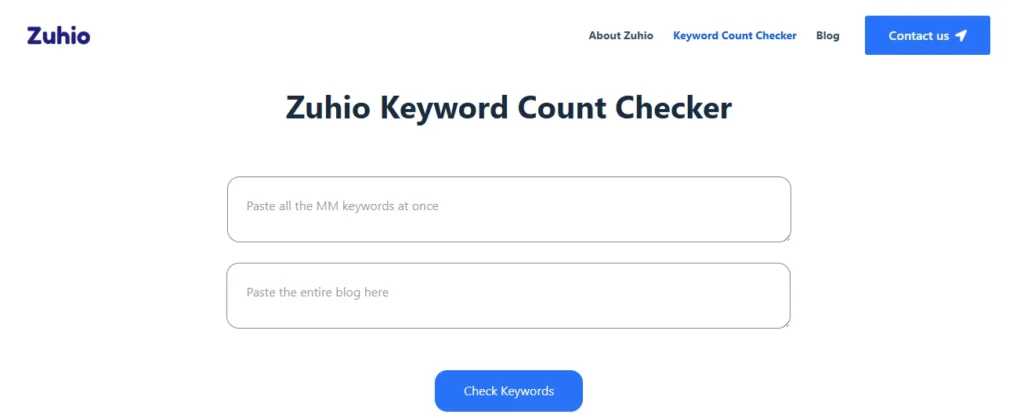
Zuhio Keyword Count Checker is a simple but effective tool that helps you understand how your keywords are distributed in your content.
Instead of guessing, it shows you actual data like:
- Total word count of your content
- How many times your main keyword appears
- Keyword density percentage
- Frequently repeated words
The biggest advantage for me was clarity. I could instantly see whether my content was balanced or not.
Key Features of Zuhio
- Instant Keyword Counting – Quickly analyze keyword frequency and density in your content.
- Smart SEO Suggestions – Get tips to improve keyword placement and optimization.
- Content Score – See a simple SEO score to measure content quality.
- Competitor Insight – Compare keyword usage with top-ranking pages.
- Easy Interface – Clean, beginner-friendly dashboard with no complexity.
- Semantic Keyword Support – Understand related terms for better SEO relevance.
- Fast Performance – Lightweight tool that works instantly even with long content.
How I Use Zuhio in My SEO Workflow
I don’t use the tool at the beginning of writing. I use it after my content is complete.
Here’s the process:
- I write the article naturally without worrying too much about keyword count
- Once the draft is ready, I paste it into Zuhio
- I analyze keyword frequency and density
- Then I make small adjustments if needed
This approach works because it keeps the writing natural while still ensuring optimization.
What I Noticed After Using Zuhio?
After using this tool consistently, I started noticing clear improvements in my content quality.
Some changes were immediate:
- Articles became more natural and readable
- I stopped overusing the same keyword repeatedly
- I started using more variations and related terms
Over time, I also noticed:
- Better engagement on content
- More consistent rankings
- Improved topical relevance
Now, I won’t say this tool alone changed everything, but it definitely helped refine my content.
What Zuhio Does Really Well?
From practical use, there are a few things I genuinely like about this tool.
It’s especially useful for:
- Quickly checking if a keyword is overused
- Identifying repetitive phrasing
- Balancing keyword usage without overthinking
- Speeding up the editing process
I also like that it’s simple. There’s no learning curve, no complex setup, just paste and analyze.
Where Should You Be Careful?
This is important, especially if you’re new to SEO.
At one point, I made the mistake of focusing too much on the numbers. I tried to hit “perfect” keyword density, and that actually made my content worse.
Here’s what I learned:
- Don’t chase exact percentages
- Don’t force keywords into sentences
- Don’t sacrifice readability for optimization
The tool should guide you, not control your writing.
Keyword Density vs Real SEO – What I Learned
One of the biggest lessons I learned is that keyword density is just one small part of SEO.
Modern search engines understand context. They don’t rely only on exact keyword matches anymore.
So instead of repeating the same keyword, I now focus on:
- Covering the topic in depth
- Using natural variations of the keyword
- Answering user intent clearly
Zuhio helps me stay balanced—but it’s not the strategy itself.
Real Example from My Content
When I was writing an article targeting a competitive keyword, I ran it through the checker and noticed I had used the same phrase too many times.
Instead of removing keywords, I:
- Replaced some with synonyms
- Rewrote a few sentences more naturally
- Added related terms to improve context
The result?
The content felt better, and performed better in both search engines and AI search tools like ChatGPT.
How This Tool Fits into My Overall SEO Strategy
Right now, my workflow looks like this:
- Keyword research first
- Content creation with focus on intent
- Light AI assistance (if needed)
- Manual editing and refinement
- Final keyword check using Zuhio
This combination helps me balance efficiency and quality.
AEO Optimization: How I Use It for Better Visibility
I’ve also started optimizing content for answer-based search.
This means:
- Answering questions clearly
- Using structured sections
- Keeping explanations simple and direct
For example:
What does Zuhio Keyword Count Checker do?
It helps analyze keyword usage and density so you can optimize your content without overusing keywords.
This kind of structure improves visibility in modern search results.
Final Verdict: My Opinion
After using Zuhio Keyword Count Checker across multiple articles, here’s my honest take:
It’s a simple but useful tool that helps improve content balance, but it works best when combined with real SEO understanding.
It won’t replace strategy, but it will definitely improve your execution.
FAQs
It’s a tool that helps analyze keyword frequency and density in your content to improve SEO optimization.
Write your content first, then use the tool to check keyword usage and make natural adjustments.
Yes, but it’s less important than content quality and search intent.
It can help optimize your content, but rankings depend on multiple factors like quality, backlinks, and authority.
Yes, it’s very simple to use and requires no technical knowledge.
