


Conversational AI has become one of the most-used products on the internet, and it was only a matter of time before advertising arrived there. That moment is now.
On October 5, 2026, OpenAI announced a new visual advertising format for ChatGPT, with testing scheduled to begin later in October in the United States. It is the company’s biggest step yet toward turning its AI assistant into a real advertising platform — and it changes the media landscape every marketer should be watching.
Key Takeaways
- OpenAI announced a visual ad format for ChatGPT on October 5, 2026; testing begins later in October in the US with an initial group of advertisers.
- The first placement is inside image generation: labeled product ads appear in a separate area while ChatGPT creates an image.
- Ads show only on the Free and Go plans — Plus, Pro, Business, Enterprise, and Edu users see none.
- Buying runs on CPM and CPC with a beta self-serve Ads Manager; measurement integrations include Hightouch, Tealium, LiveRamp, AppsFlyer, Adjust, and Triple Whale.
- OpenAI says ads are clearly labeled, kept separate from answers, and do not influence what ChatGPT says.
What Did OpenAI Actually Announce?
Until now, every ChatGPT ad has been a single text-style card below a response: advertiser name, logo, headline, copy, landing page, and an image asset, sitting in a “sponsored” section beneath the chat.
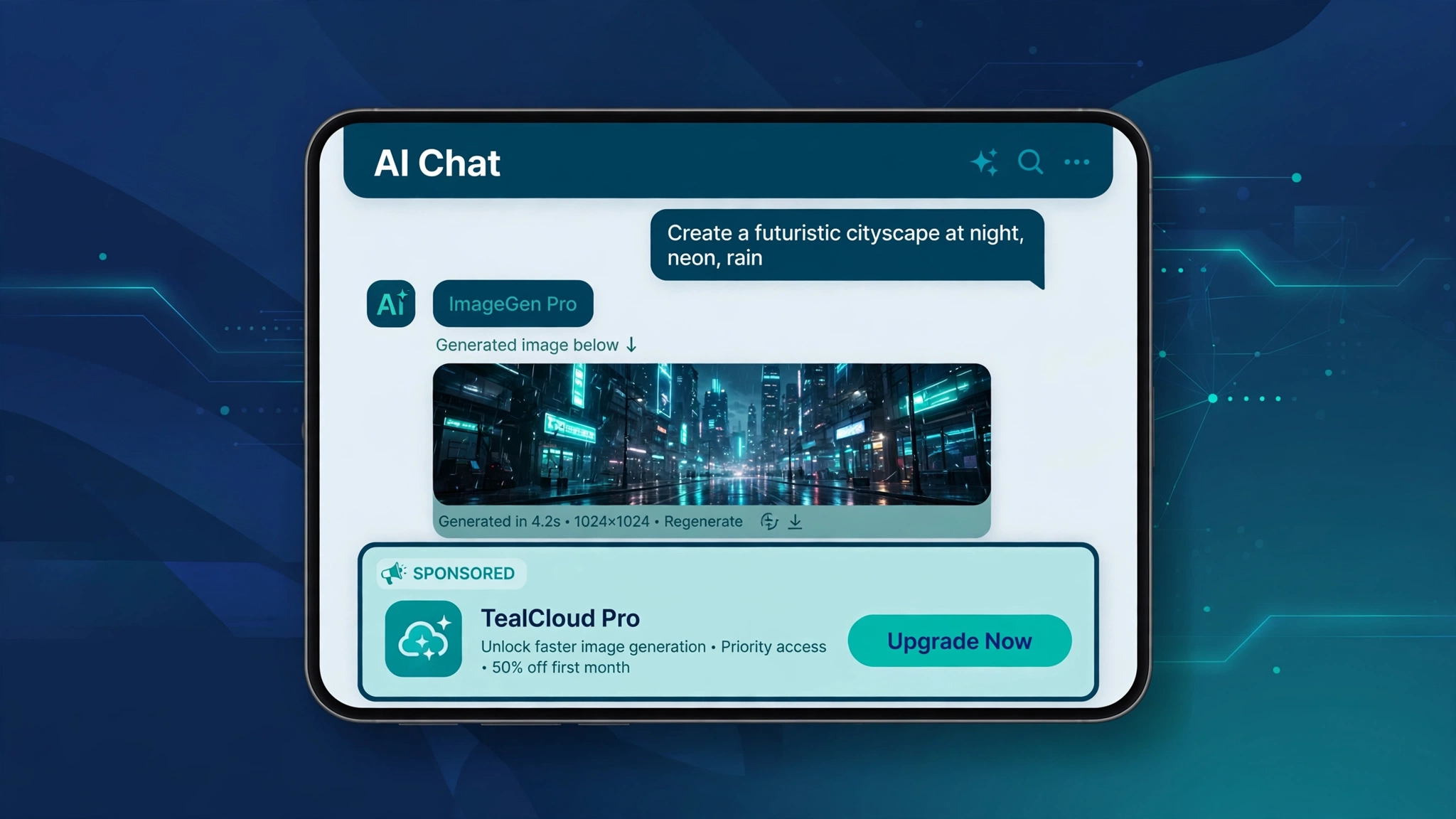
The new format is different in kind. Instead of a text line, advertisers can show product imagery — “product inspiration, product usage, or the experiences they make possible,” in OpenAI’s words. The first test placement is inside image generation: while ChatGPT creates an image, product ads appear in a separate visual area on the screen, either as a scrolling carousel or a single row of product pictures with a “Learn more” button.
OpenAI’s example screenshots show a grocery brand’s product images appearing on mobile while an image request is processed. The company stresses three guardrails: the ads are clearly labeled, they remain separate from the image being created, and advertising does not influence the model’s answers.
Testing begins later in October 2026 in the United States with an initial group of advertisers. OpenAI says it will try new formats later.
Who Sees ChatGPT Ads — and Who Doesn’t?
Availability matters more than most coverage suggests. Here’s the current picture:
| Who | Ads? |
|---|---|
| Free and Go plans | Yes — including the new visual format test |
| Plus, Pro, Business, Enterprise, Edu | No ads at all |
Ads have launched in the US, Canada, Australia, New Zealand, the UK, Mexico, Brazil, Japan, and South Korea, with more markets planned. Formats and availability can vary by market.
The plan split is the strategic detail. OpenAI is monetizing its free and low-cost tiers while keeping the paying audience ad-free — the same playbook that built the social advertising giants. For advertisers, that means the reachable audience skews toward casual and cost-sensitive users, not the power-user segment.
How Do Advertisers Buy ChatGPT Ads?
OpenAI has moved quickly from a small test toward a real ad platform. The buying and measurement stack now includes:
- Buying models: CPM and CPC, through a beta self-serve Ads Manager.
- Conversion data: integrations with Hightouch, Tealium, and LiveRamp let advertisers send conversion signals into ChatGPT Ads. The LiveRamp expansion is notable — it means first-party audiences (CRM lists, loyalty data, site visitor data) can be activated inside ChatGPT Ads.
- Attribution: AppsFlyer, Adjust, Triple Whale, Branch, Singular, Kochava, and others are supported.
- Incrementality: geo-based experiments with Haus, Measured, and WorkMagic are in early stages.
- Brand suitability: pilot programs with DoubleVerify and Integral Ad Science scan the ad environment without accessing private conversations. Qualifying advertisers can also use Negative Phrases to exclude placements that conflict with their brand policies.
- Reporting: an optional one-day view-through window and an Event Quality Score for pixel and Conversions API signals.
OpenAI’s placement guardrails assess whether a conversation is appropriate for advertising, aiming to keep ads out of emotionally vulnerable, sensitive, or otherwise unsuitable contexts, with automated review plus human oversight.
Why Start with Image Generation?
The placement choice is deliberate. When users generate images, they are often in specific creative or purchase-intent contexts: designing packaging, visualizing a renovation, creating promotional material. The density of commercial signals in those moments is far higher than in ordinary information-retrieval conversations.
It also turns idle time into inventory. Users wait seconds while an image renders — a natural slot for a visual ad that doesn’t interrupt the conversation itself.
With ChatGPT reaching a reported 1.2 billion weekly users, even a test confined to US image generation is a meaningful new surface. The open question is user response: sponsored messages inside an AI conversation are a new experience, and trust will depend on how clearly the separation between ads and answers holds up in practice.
What Does This Mean for SEO and Content Marketers?
Three practical implications:
A new intent-based channel is forming. ChatGPT ads reach people based on what they are trying to accomplish in a conversation — not just the keywords they typed. That is a different targeting paradigm from search ads, and early testers will learn its economics first.
Measurement is the real story. The October 5 update answered advertisers’ two biggest complaints — measurement and formats. If you run paid media, the integrations list (LiveRamp, Triple Whale, Northbeam-style attribution) tells you OpenAI wants this measured like performance marketing, not treated as an experiment.
Organic and paid AI visibility are converging. The same brands investing in AEO and GEO (see AEO vs GEO vs SEO differences) to get cited in AI answers will now be able to buy presence in the same interfaces. Understanding both sides — the tools that measure AI search visibility (see types of AI SEO tools) and the ad products appearing next to it — is becoming one job, not two.
Final Thoughts
ChatGPT ads are moving from experiment to platform: visual formats, real buying models, and a serious measurement stack. The US image-generation test later this month is the one to watch — it will show whether users accept advertising inside AI conversations and whether the performance economics work.
For marketers, the move is simple: follow the test results, get familiar with the Ads Manager and measurement integrations now, and think about how conversational ad placements fit alongside your existing search and social mix. The channel is early, and early is when the learning is cheapest.
People Also Ask
When did ChatGPT ads launch?
OpenAI moved ChatGPT advertising from a small test toward a broader platform through 2026, and on October 5, 2026 announced a new visual ad format with US testing scheduled for later in October.
Who sees ads in ChatGPT?
Users on the Free and Go plans see ads. Plus, Pro, Business, Enterprise, and Edu accounts are ad-free.
What is the new visual ad format?
Image-based ads shown during ChatGPT’s image generation — product pictures in a carousel or row, clearly labeled as advertising and kept separate from the image being created. Testing starts in the US later in October 2026.
Do ChatGPT ads influence the answers?
According to OpenAI, no. The company says ads are clearly labeled, remain separate from responses, and do not influence what ChatGPT says. Advertisers also don’t receive users’ private conversations.
How do advertisers buy ChatGPT ads?
Through CPM and CPC buying in a beta self-serve Ads Manager, with conversion integrations (Hightouch, Tealium, LiveRamp), attribution partners (AppsFlyer, Adjust, Triple Whale, and others), and brand-suitability pilots with DoubleVerify and Integral Ad Science.
