


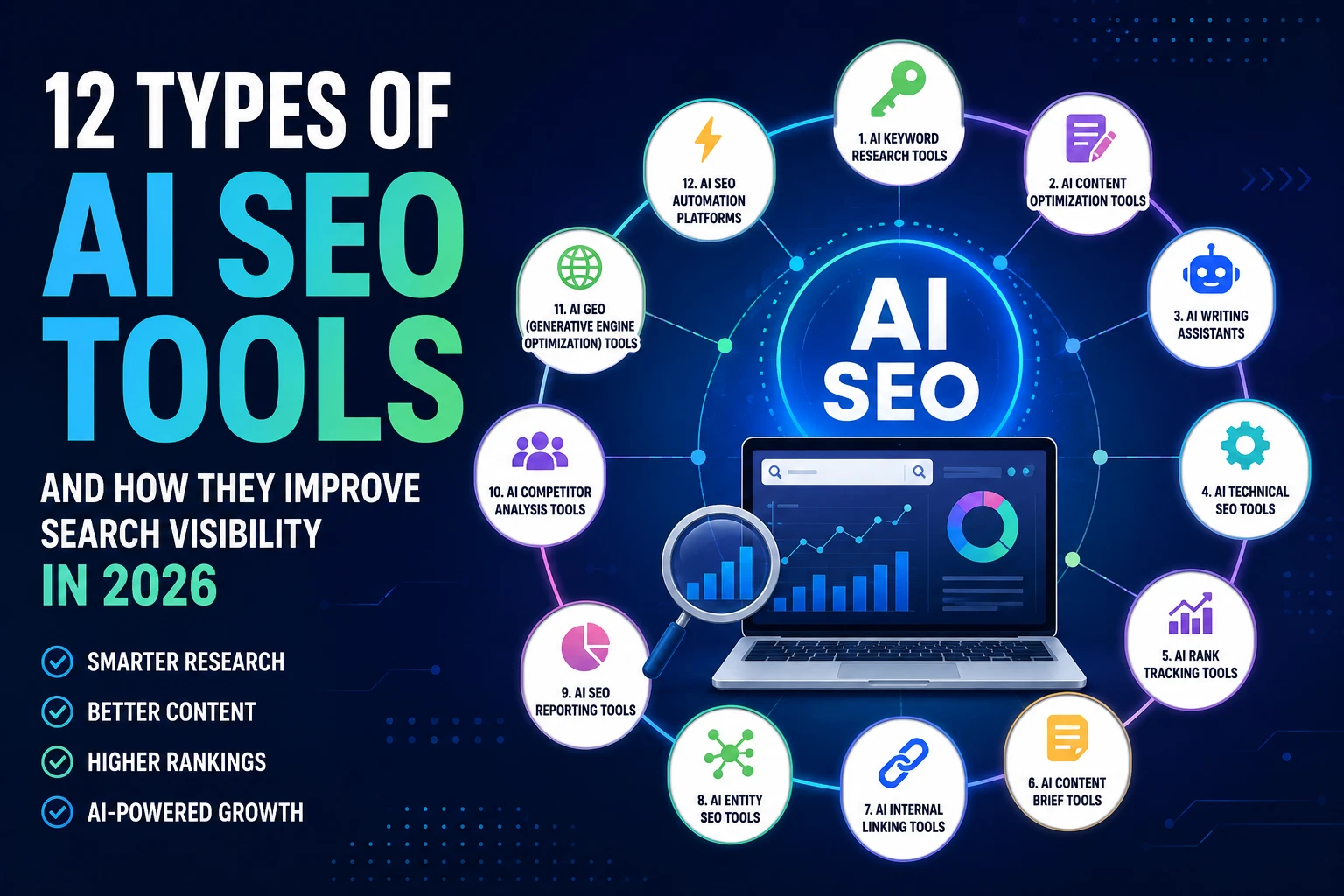
AI SEO tools have evolved far beyond simple keyword research software. Modern SEO platforms now help marketers optimize content for traditional search engines, AI search assistants, and generative search experiences.
Understanding the different types of AI SEO tools can help you build a more effective content strategy, improve rankings, and increase visibility across search platforms.
Key Takeaways
- AI SEO tools now cover content creation, optimization, technical SEO, and GEO.
- Different tools serve different stages of the SEO workflow.
- Entity SEO and AI visibility tracking are becoming increasingly important.
- AI should enhance human expertise, not replace it.
- The best results come from combining multiple AI SEO tool categories.
How AI SEO Tools Have Evolved
The first generation of SEO tools focused primarily on keyword research and backlink analysis. While these functions remain important, modern AI SEO tools can now assist with nearly every stage of the optimization process.
Today’s platforms use machine learning, natural language processing (NLP), and predictive analytics to understand search intent, analyze competitors, generate content ideas, identify optimization opportunities, and automate repetitive tasks.
The rise of AI-powered search experiences has also expanded the role of SEO tools. Businesses are no longer optimizing exclusively for search engines like Google. They are increasingly trying to improve visibility in AI-generated responses from platforms such as ChatGPT, Gemini, Perplexity, and other answer engines.
As a result, AI SEO software has evolved from a collection of research tools into comprehensive marketing platforms that support content creation, optimization, reporting, and AI visibility monitoring.
Why Businesses Are Investing in AI SEO Tools
AI SEO tools help organizations save time while making data-driven decisions. Instead of manually analyzing hundreds of ranking factors, marketers can use AI systems to identify patterns and opportunities much faster.
Some of the biggest advantages include:
- Faster content production
- Improved keyword discovery
- Better topic coverage
- Automated technical audits
- Smarter internal linking
- Enhanced reporting capabilities
- Improved AI search visibility
For growing businesses, these efficiencies can significantly reduce the amount of time required to execute an SEO strategy.
Types of the Best AI SEO Tools 2026
Here I have listed some of the best AI SEO tools that help improve AI search visibility and track brand mentions in AI search results.
1. AI Keyword Research Tools
These tools identify search opportunities, analyze user intent, and uncover long-tail keywords that traditional keyword research may miss.
Examples:
- Semrush
- Ahrefs
- Answer Socrates
- LowFruits
- Rankability
Benefits
- Discover low-competition keywords
- Find question-based searches
- Identify topical clusters
- Understand search intent
2. AI Content Optimization Tools
Content optimization tools analyze top-ranking pages and provide recommendations for improving content relevance. Some digital marketers also use AI humanizers to improve AI content for their marketing campagins.
Examples:
- Surfer SEO
- Clearscope
- NeuronWriter
- Frase
Benefits
- NLP-based recommendations
- Semantic keyword suggestions
- Better content structure
- Improved topical coverage
3. AI Writing Assistants
AI writing tools help generate drafts, outlines, FAQs, and content briefs.
Examples:
- ChatGPT
- Jasper
- Claude
- Copy.ai
Benefits
- Faster content creation
- Idea generation
- Outline development
- Content expansion
4. AI-powered Technical SEO Tools
Technical SEO platforms automate website audits and identify issues affecting rankings.
Examples:
- Screaming Frog AI integrations
- Alli AI
- Sitebulb
- Semrush Site Audit
Benefits
- Crawl error detection
- Page speed recommendations
- Schema opportunities
- Internal linking analysis
5. AI Rank Tracking Tools
These tools monitor keyword performance and search visibility.
Benefits
- Track ranking changes
- Monitor competitors
- Discover ranking opportunities
- Measure SEO progress
- Track brand mentions in AI search tools
6. AI Content Brief Generation Tools
Creating detailed content briefs manually takes time. AI tools automate this process.
Benefits
- Faster content planning
- Better topic coverage
- Competitor insights
- Improved writer guidance
7. AI Internal Linking Tools
Internal links help search engines understand website structure.
Examples:
- Link Whisper
- Outranking
- Surfer Auto Internal Links
Benefits
- Improve crawlability
- Distribute authority
- Increase page discovery
- Strengthen topic clusters
8. AI Entity SEO Tools
Entity SEO has become increasingly important because search engines rely heavily on knowledge graphs and semantic understanding.
Benefits
- Improve topical authority
- Strengthen semantic relevance
- Increase AI citation opportunities
- Support Generative Engine Optimization (GEO)
- Improve Answer Engine Optimization (AEO)
9. AI SEO Reporting Tools
Reporting platforms transform raw SEO data into actionable insights.
Benefits
- Automated reporting
- Performance tracking
- Client dashboards
- Trend identification
10. AI Competitor Analysis Tools
These solutions analyze competitors’ rankings, content, backlinks, and topical authority.
Benefits
- Find content gaps
- Discover backlink opportunities
- Analyze ranking strategies
- Identify weak competitor pages
11. AI GEO (Generative Engine Optimization) Tools
A newer category focused on helping content appear in AI-generated answers.
Examples:
- Profound
- Goodie
- Otterly AI
Benefits
- Track AI citations
- Measure AI visibility
- Optimize for ChatGPT and Gemini
- Improve answer engine presence
GEO is becoming an important extension of traditional SEO as AI search experiences continue to grow.
12. AI SEO Automation Platforms
These platforms combine multiple SEO functions into a single workflow.
Benefits
- Workflow automation
- Bulk optimization
- Faster execution
- Reduced manual effort
How to Choose the Best AI SEO Tools 2026
With hundreds of options available, choosing the right tool can be challenging.
The best solution depends on your goals.
For Bloggers
Focus on:
- Keyword research tools
- Content optimization tools
- AI writing assistants
For Agencies
Consider:
- Reporting platforms
- Technical SEO tools
- Competitor analysis software
For Enterprise Brands
Look for:
- GEO monitoring
- Entity optimization
- SEO automation platforms
- Advanced AI Search analytics
Instead of selecting the platform with the most features, prioritize the tools that solve your biggest SEO challenges.
Choose the Right SEO Tool for your Workflow
AI SEO tools have transformed the way businesses approach search optimization, making it easier to research keywords, create content, analyze competitors, and improve visibility across both traditional search engines and AI-powered platforms.
However, no single tool can handle every aspect of SEO effectively. The most successful strategies combine different types of AI SEO tools to support content creation, technical optimization, entity SEO, reporting, and Generative Engine Optimization (GEO).
People Also Ask
AI search optimization tools are software platforms that help businesses improve their visibility in AI-powered search engines such as ChatGPT, Google AI Overviews, Gemini, Claude, and Perplexity. These tools analyze brand mentions, AI citations, content performance, and entity recognition to help marketers optimize content for generative search results and increase AI-driven discoverability.
Keyword research and content optimization tools are typically the most important starting points for most websites.
They can help identify opportunities and optimize content, but rankings still depend on content quality, authority, and user experience.
GEO (Generative Engine Optimization) tools help brands improve visibility within AI-generated search responses and answer engines.
Yes. They can save time, improve efficiency, and help marketers scale SEO efforts more effectively.
